Hi, welcome to the talk page! This is where I take an opportunity to reflect on the article, review the process of composing it, and give some commentary. I like the talk page because I allow myself to ramble and editorialize much more here, which is a lot closer to the conversational tone that comes naturally to me. If you haven't read the main article yet, make sure to go and read it now before I spoil everything. Now let's talk about the article.
The SAR anecdote
Yes, that actually did happen. I'd like to emphasize that it wasn't my project (I don't do satellites, too much coordination), I was just there to help out with the fieldwork. In the image annotation I implied that the MPs actually had their guns pointed at us; I don't remember exactly if that's true or not. There were definitely guns out which at the time I wouldn't have distinguished from pointed, but I recognize in hindsight that there's a big difference. After the initial encounter they seemed reasonably accommodating considering the situation. They basically had us sit on the ground for a couple hours while they probed about what we were doing and rummaged through our equipment. I think the only reason it took so long to resolve is that they were reporting everything up their own chain of command before reaching out to other organizations. By the time they let us go it was well past midnight and the research team I was working with didn't seem very interested in continuing the collection so we packed up and got out. It wasn't a very fun night but at least I got a story out of it.
My thoughts on the article
My main concern with this article is that the topic was way too broad. Maybe I shouldn't have wrapped SAR into it and focused on just the optical imagery side of things, but SAR is one of the main reasons I wanted to write the article in the first place. I am a little concerned that the SAR portion ended up being too dense, but I personally have never really found the standard high-level explanation of SAR to be very fulfilling so I wanted to write one that went into more depth. It's tough to describe SAR without getting heavy handed with the math (which I'm not opposed to doing in the right article, by the way) but I wanted to keep it conceptual and see how far I could go. I really don't like the typical antenna array diagrams you see in textbooks, so I feel bad about including one in this article but I couldn't justify leaving it out with how complex the text was getting. I recognize it was pretty dense, even with the diagram, but I'd rather a reader come out of the section with a vague idea of "multiple antenna elements next to each other can interact in a way that's dependent on phase" than get into an extended formal explanation of something that's not central to the article.
If you're interested in learning more, I really do recommend Principles of Modern Radar. It's a beast but it's one of the most satisfying books for me to have gotten through and it's not excessively dense.
I do feel a little bit weird about the SAR section since it violated the overall "past -> present" flow but it was the best way I could think to organize it. I didn't want to get into introductory radar, then back to imagery, then back to Doppler, etc. just to maintain the temporal theme.
I also recognize that there's a distinct increase in the pace of the article after World War 1, and I'd like to clarify that that wasn't due to poor planning. It's legitimately quite difficult to separate a lot of the post-WWI advancements into specific eras. There was a lot going on at the same time, some of it was classified for a long time, different countries were doing different things without collaborating, etc. I guess what I'm really trying to say is that the article increased pace because reality increased pace.
I have mixed feelings about the inclusion of the "computer science 101" material leading into digital imagery. I think I did it well but I don't want to have to give a similar overview in every future article where I wander into computer science. At some point I'd like to have an introductory computer science article I can reference back to when needed, but I don't have that yet.
I enjoyed the camera electronics portion, although I'm worried it got too dense for a reader that's not comfortable with electronics. I actually picked up some literature on digital cameras just for this article since I didn't actually know much about the imaging sensors they used beforehand.
I initially wanted to get into more detail about vignetting, optical filters, DEMs, image registration, layover and foreshortening, etc. but chose not to since the article was already getting a to be a little much. I'm conflicted about deciding to include a paragraph on demosaicing. It's something I'm really fascinated by but I'm worried it didn't earn its place in the article. It's another one where I could have included a diagram but decided not to since it was too far aside the purpose of the article.
The imagery
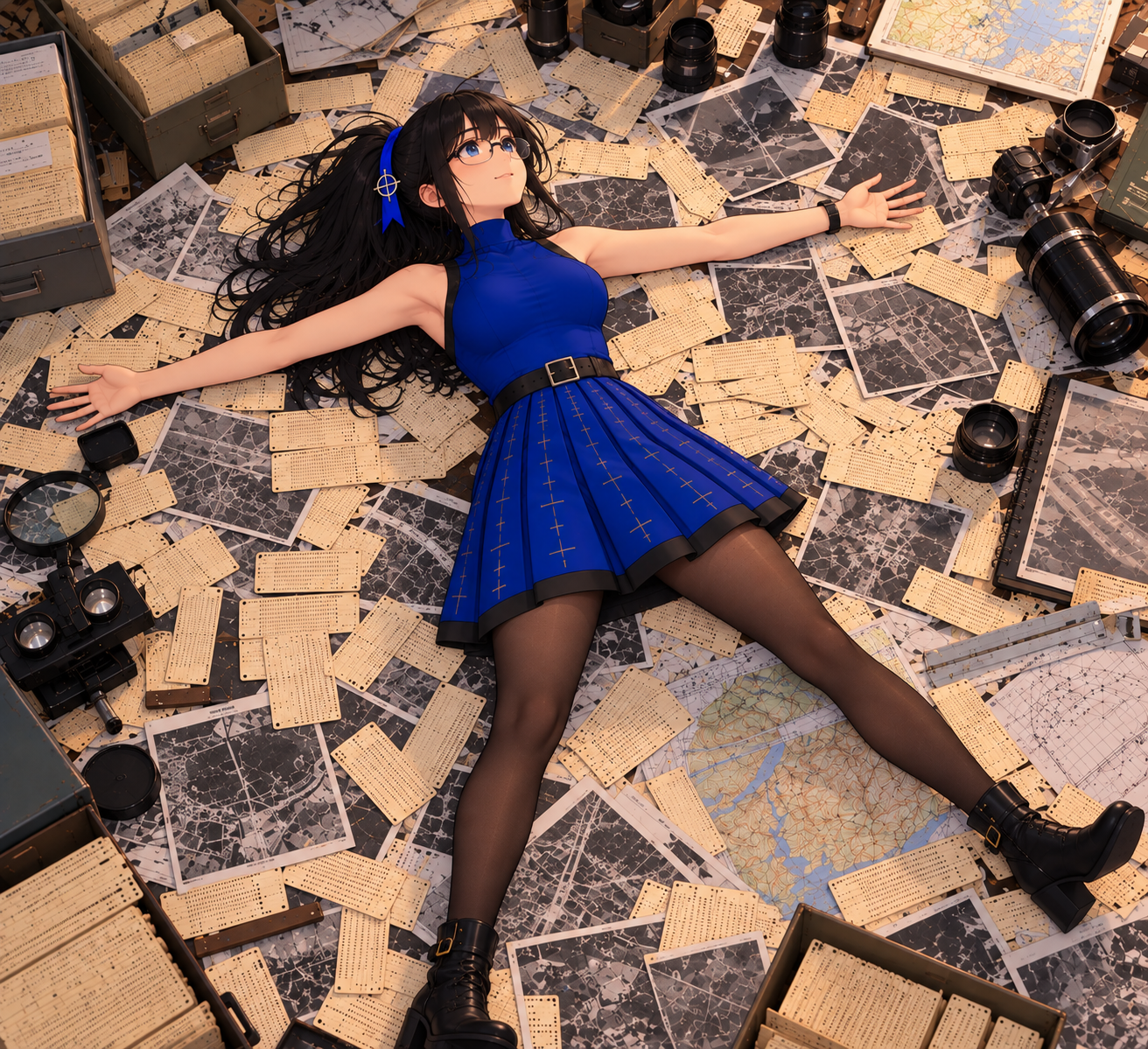
I really like some of the images in this article. The opening image turned out really cool, although the image generator is always taking creative liberty with my boots. I try to make them consistent between images but sometimes it's a losing battle. Sometimes you just need to take what you can get and just be happy you managed to get an image without the cat ears the generator keeps compulsively adding.
The pigeon image is the first image I've included that doesn't depict me. I never had an intention to limit my imagery like that, but sometimes when I get a specific picture in my head I just have to see it.